Why Clean Your Records at All?
Dust, dirt, and static can degrade your listening experience, causing pops, skips, and muffled sound. So knowing how to clean vinyl records is important, as regular care ensures crisp and clear sound. Neglecting proper care can result in permanent damage to your record collection, reducing both its value and listening quality.
Beginner Friendly Cleaning Methods
If you’re just starting out, here are the simplest and safest ways to clean your records without expensive equipment
- Dry Brushing with an Anti-Static Brush
- Best for? Quick dust removal before or after playback.
- Use a carbon fiber anti-static brush to gently sweep dust off your records.
- Always move the brush in a circular motion along the grooves.
- Avoid pressing too hard, as this can push dust further into the grooves.
- Ideal for daily maintenance and preventing buildup.
- Best for? Quick dust removal before or after playback.
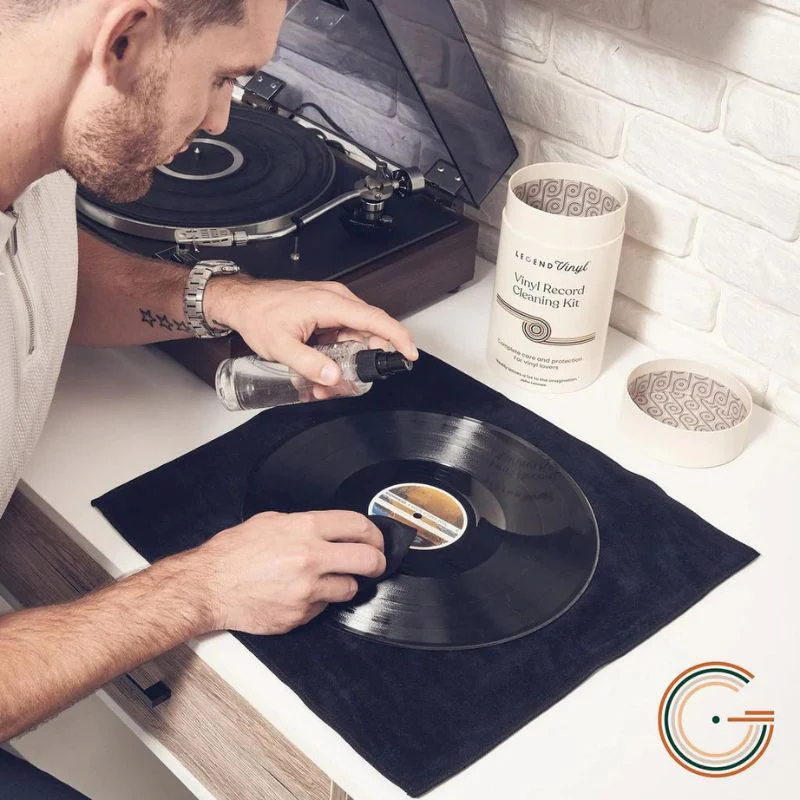
- Microfiber Cloth & Distilled Water Method
- Best for? Removing light smudges and surface dirt.
- Use a soft microfiber cloth and lightly dampen it with distilled water (never tap water, as it contains minerals that can leave residue).
- Gently wipe along the grooves in a circular motion.
- Dry the record with a clean microfiber cloth before playing.
- Great for casual vinyl owners who want an easy, cost-effective solution.
- Best for? Removing light smudges and surface dirt.
Deep Cleaning Methods for Collectors & Audiophiles
For stubborn dirt, static, and older records in need of revival, these pro-level cleaning methods will bring them back to life.
- Record Cleaning Solution & Soft Brush Method
- Best for? Removing deep-seated dirt and grime.
- Use a record cleaning solution (like GrooveWasher or Spin-Clean) specifically formulated for vinyl.
- Apply the solution sparingly and use a soft, anti-static brush to gently scrub in circular motions.
- Wipe clean with a microfiber cloth and let air dry completely before playing.
- Ensures long-term preservation for high-value records.
- Best for? Removing deep-seated dirt and grime.
- The Spin-Clean Record Washer System
- Best for? Cleaning multiple records efficiently
- Fill the Spin-Clean basin with distilled water and the included cleaning solution.
- Insert the record and rotate it a few times in both directions to loosen dirt.
- Remove and dry with the provided lint-free cloths.
- Ideal for collectors who frequently handle large batches of records.
- Best for? Cleaning multiple records efficiently
- Ultrasonic Record Cleaning Machine
- Best for? Audiophiles and serious collectors
- Uses high-frequency sound waves to remove dirt embedded deep in the grooves..
- Provides the most thorough cleaning but can be costly ($300-$1,000+ investment).
- Ideal for archival-quality preservation and rare vinyl collections.
- Best for? Audiophiles and serious collectors

Bonus Tips for Maintaining Clean Vinyl Records
- Store records vertically in anti-static inner sleeves to prevent warping.
- Always handle records by the edges to avoid fingerprints and oil buildup.
- Keep your turntable’s stylus clean with a stylus brush or cleaning gel.
- Avoid playing dirty records, as dust and grime can transfer to the stylus and damage both the record and your needle.
- Use an anti-static gun (like a Milty Zerostat) to reduce static buildup and prevent dust attraction.
- Control humidity and temperature in your storage area to avoid mold growth and vinyl warping.
Keeping your turntable’s stylus clean is just as important as cleaning your records. If you’re new to vinyl, check out our Beginner’s Guide to Turntable Components to understand how each part affects your sound quality.
Common Cleaning Mistakes to Avoid
- Using tap water – Minerals and impurities can leave deposits and degrade the vinyl.
- Applying too much pressure – Scrubbing aggressively can damage the grooves.
- Using household cleaners – Chemicals in general-purpose cleaners can strip the protective coating and degrade sound quality.
- Skipping regular cleaning – Allowing dirt to build up can lead to permanent scratches and groove distortion.
Final Thoughts
Regularly cleaning your vinyl ensures better sound quality, longer record lifespan, and a more enjoyable listening experience. Whether you’re using a simple carbon fiber brush for daily maintenance or investing in an ultrasonic cleaner for audiophile-level care, maintaining your records will keep your collection sounding pristine for years to come.
What’s your go-to method for cleaning vinyl records? Let me know in the comments!
Leave a Reply
You must be logged in to post a comment.